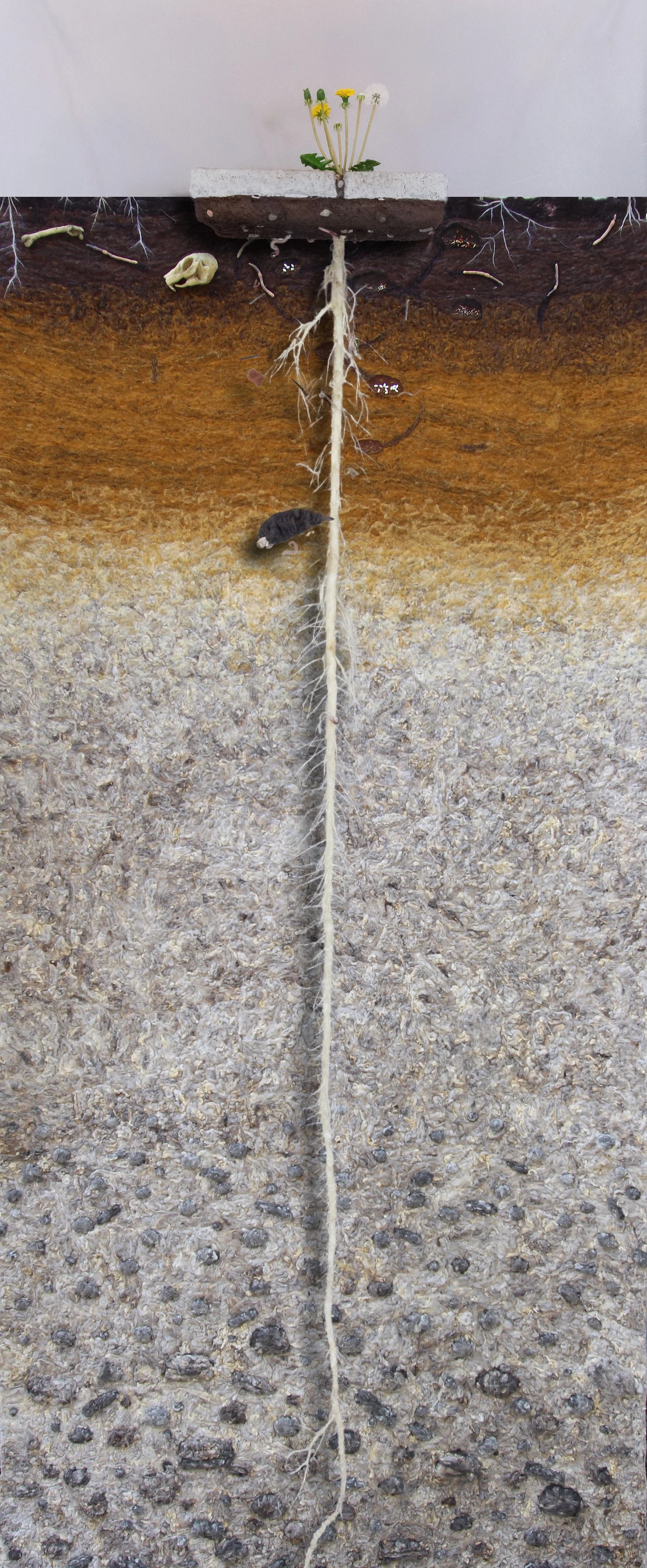
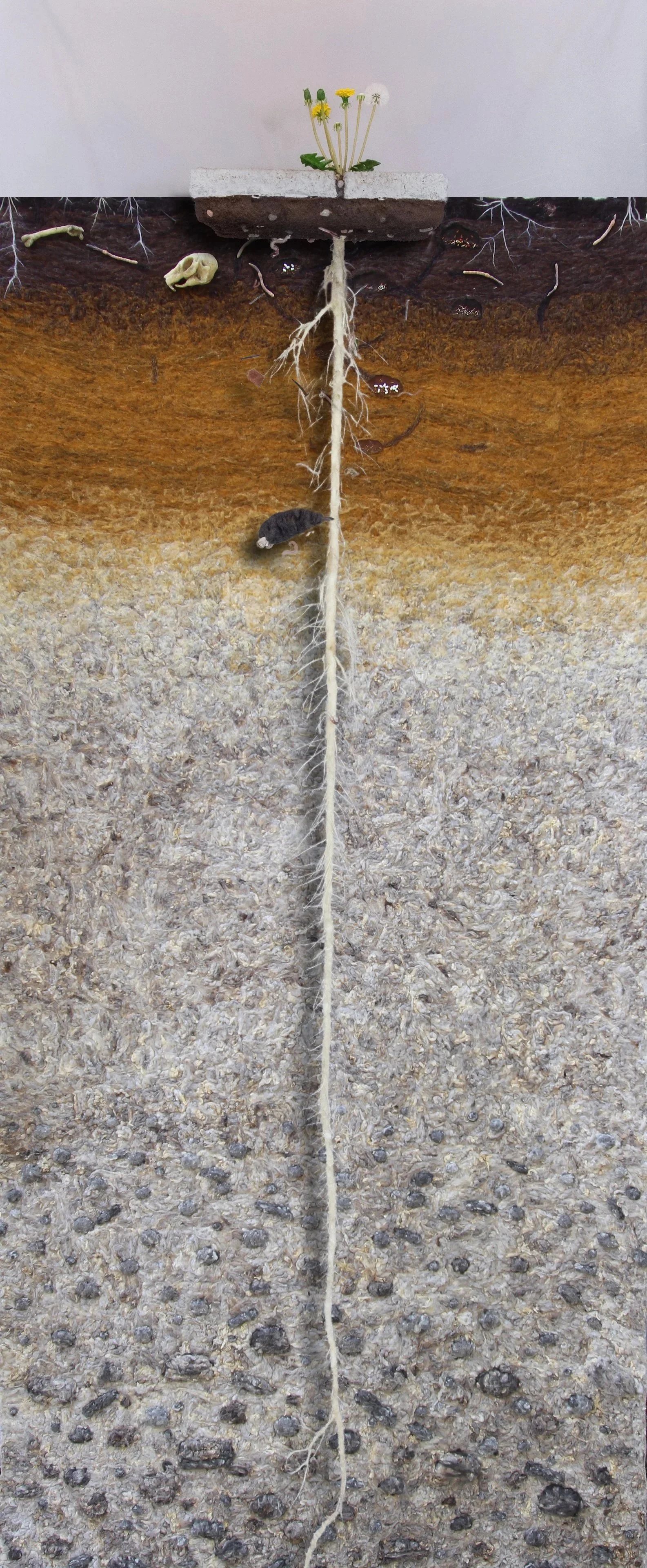
My Roots are Deeper Than They Can Dig
Installation Proposal

Artist statement
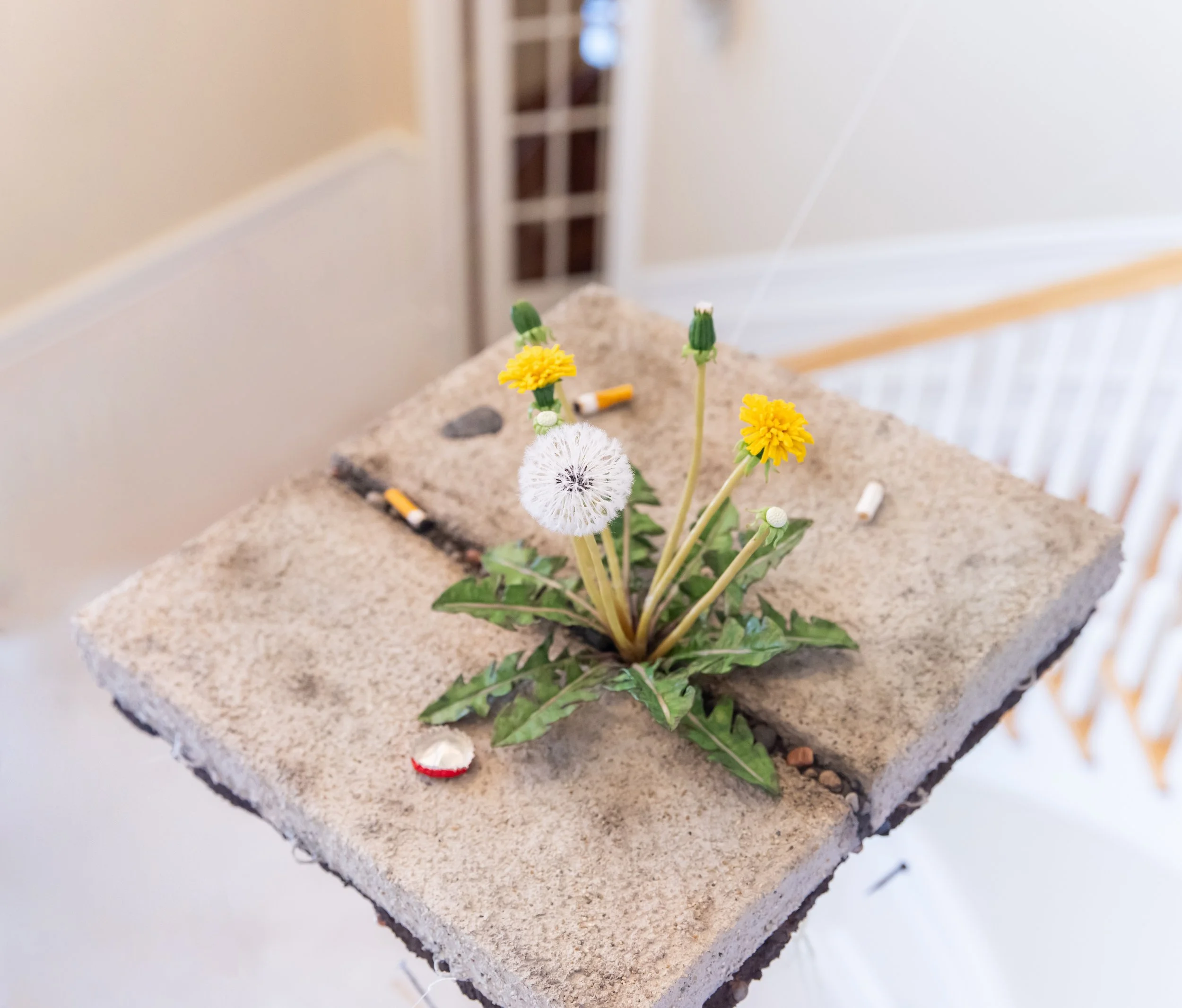
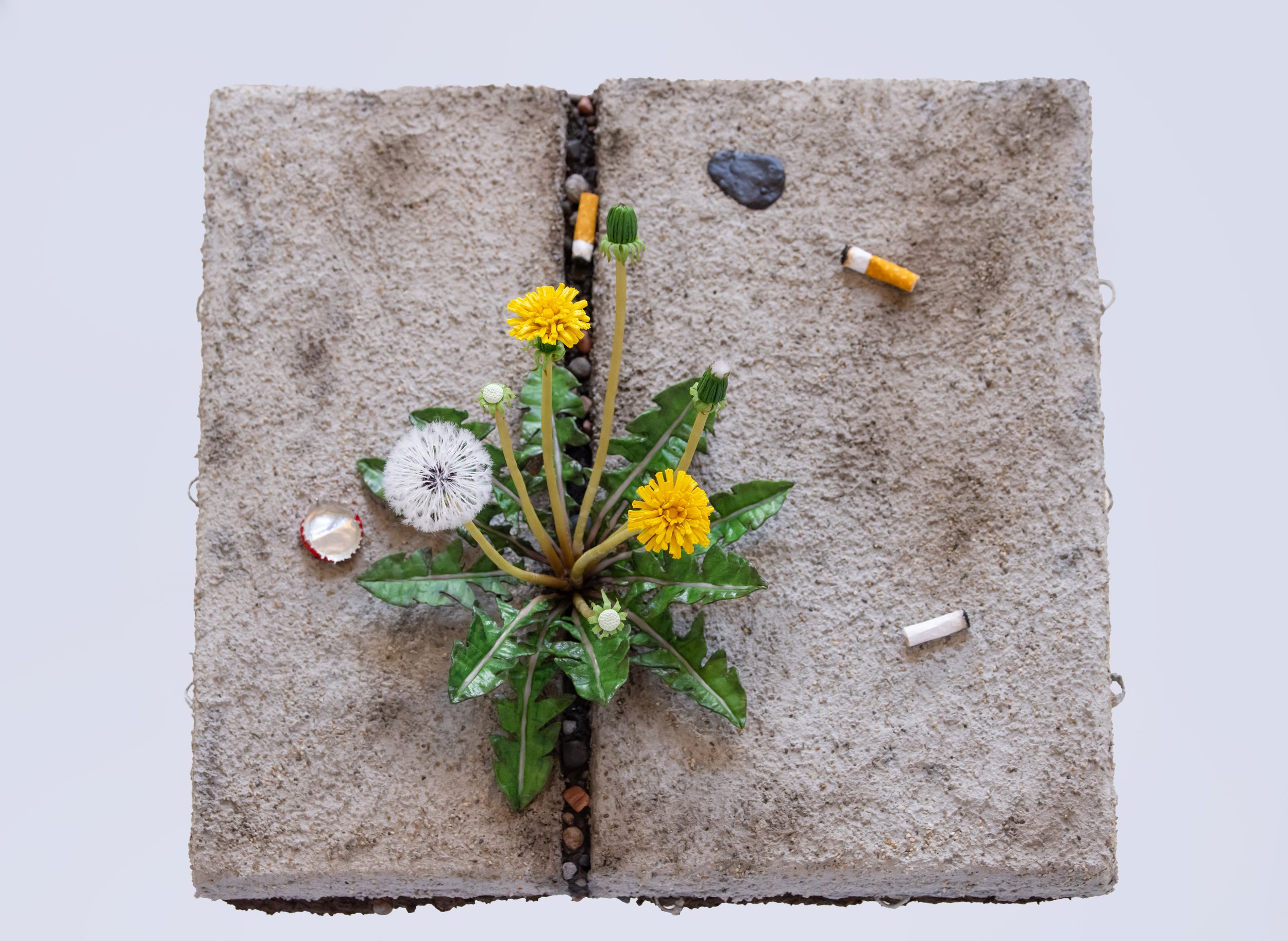
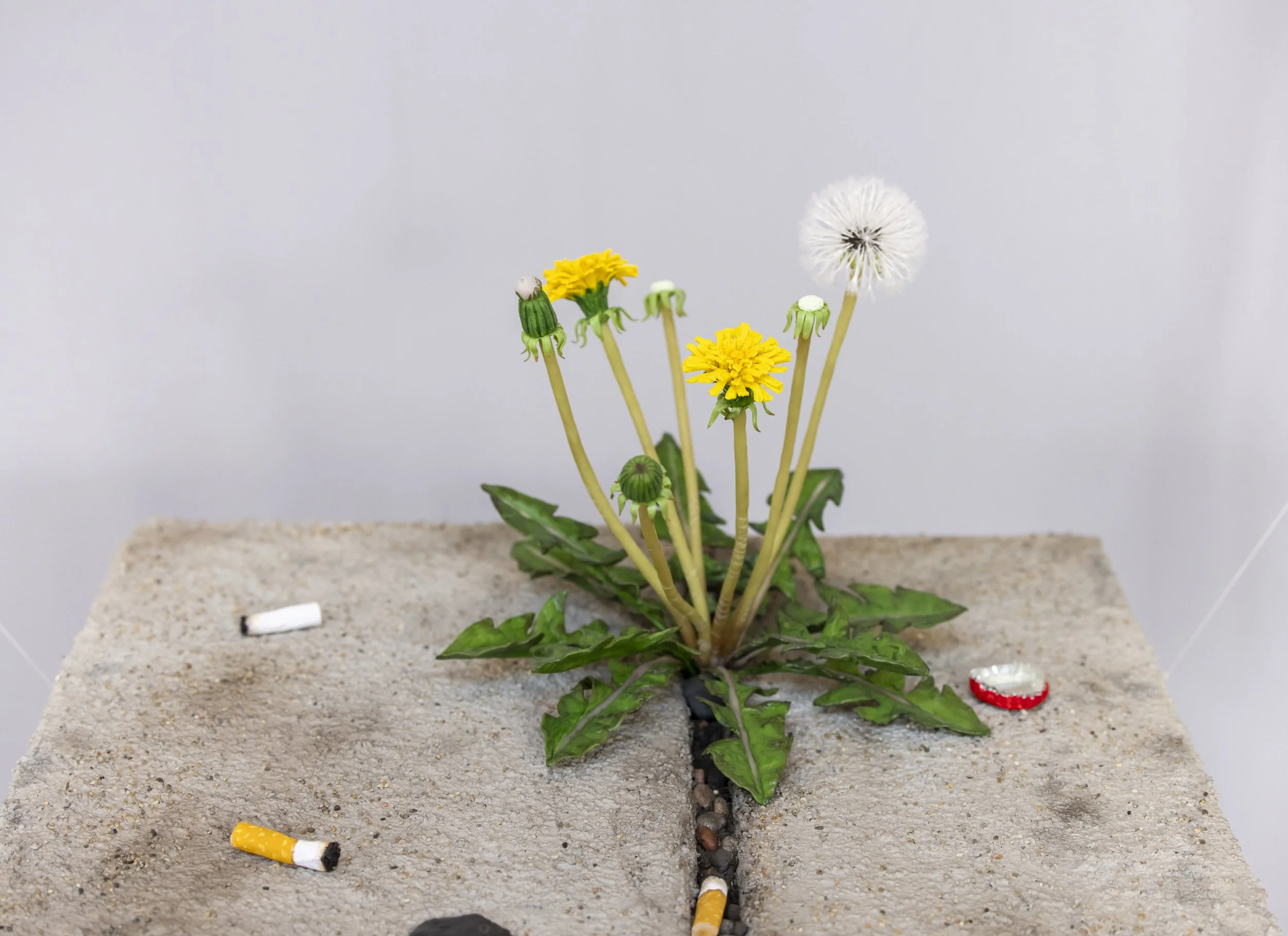
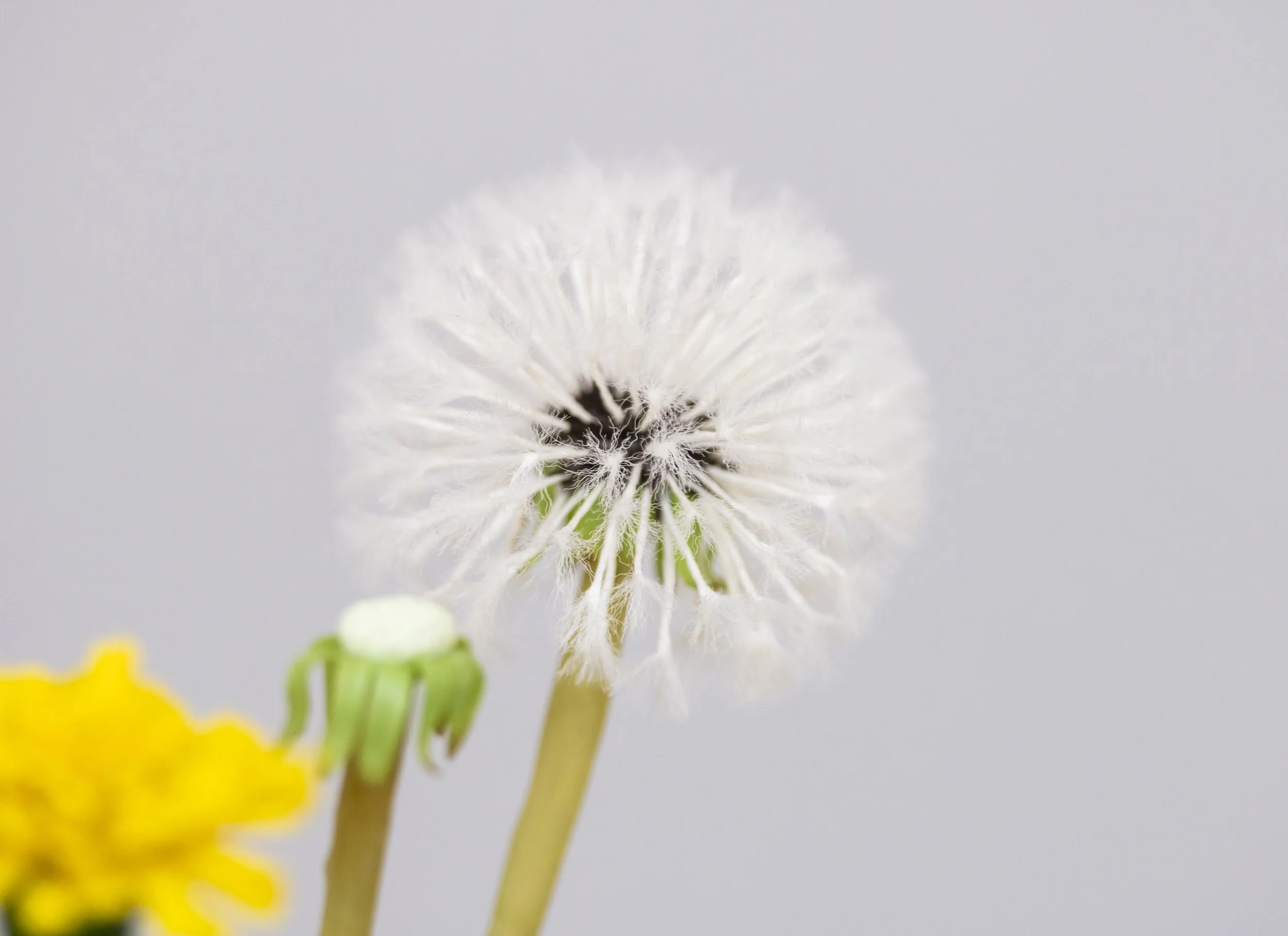
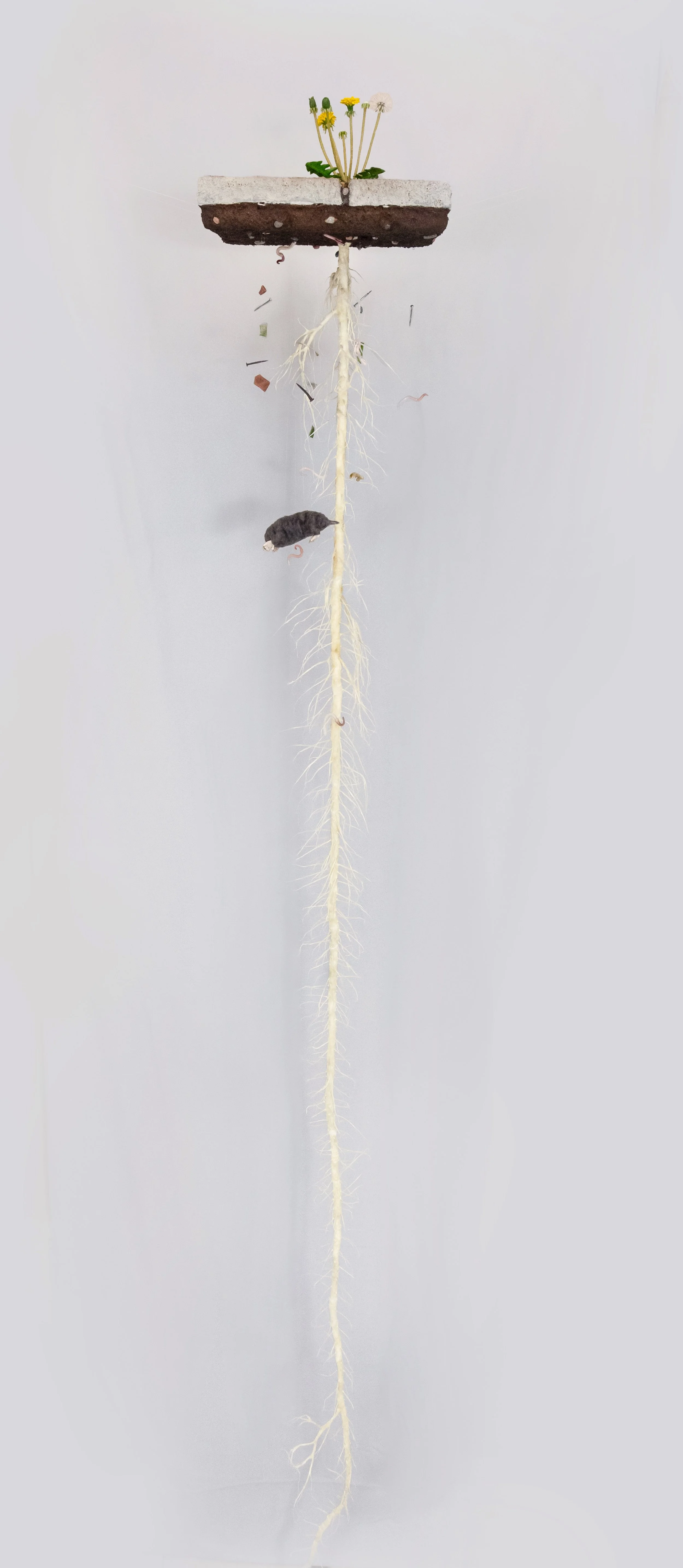
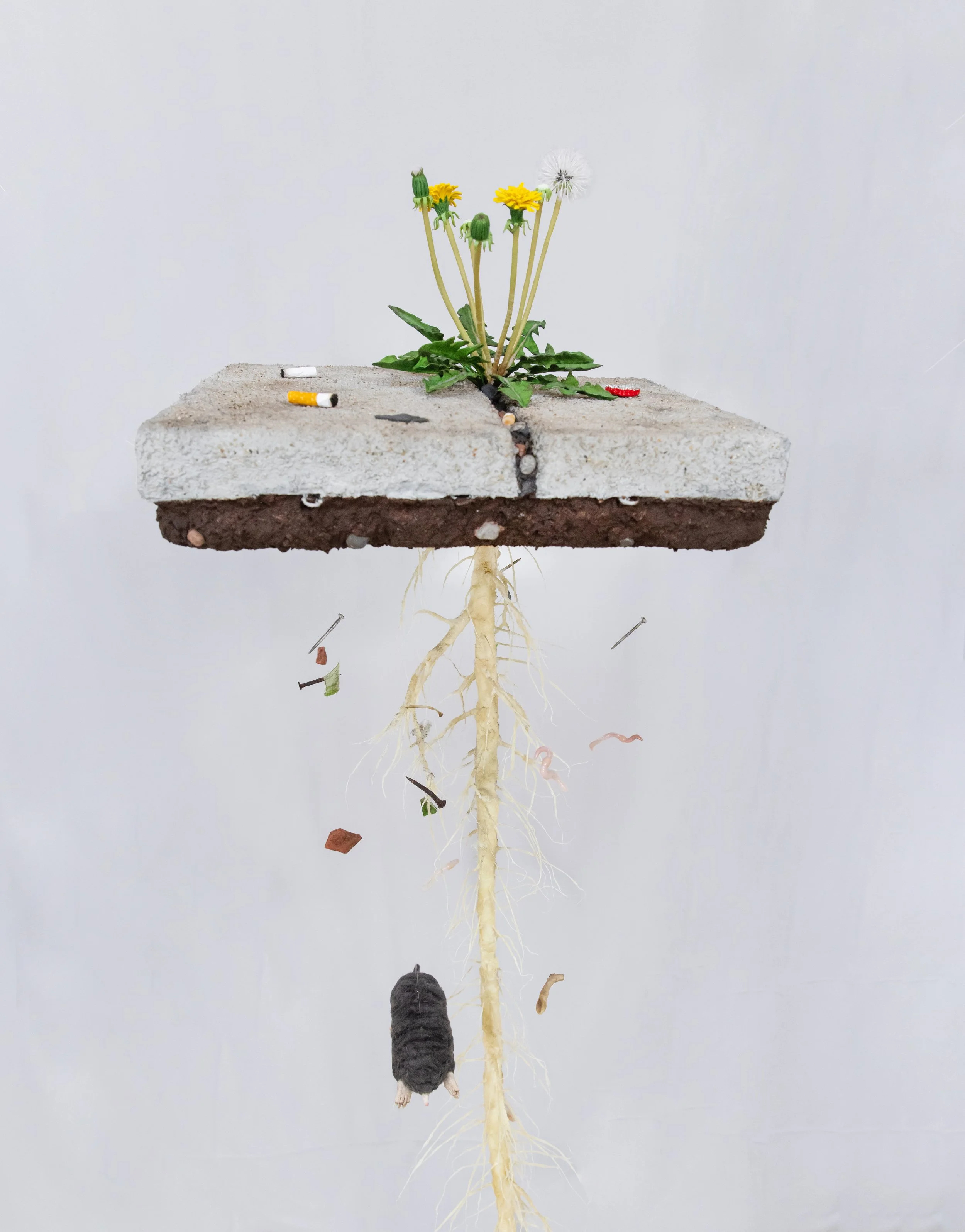
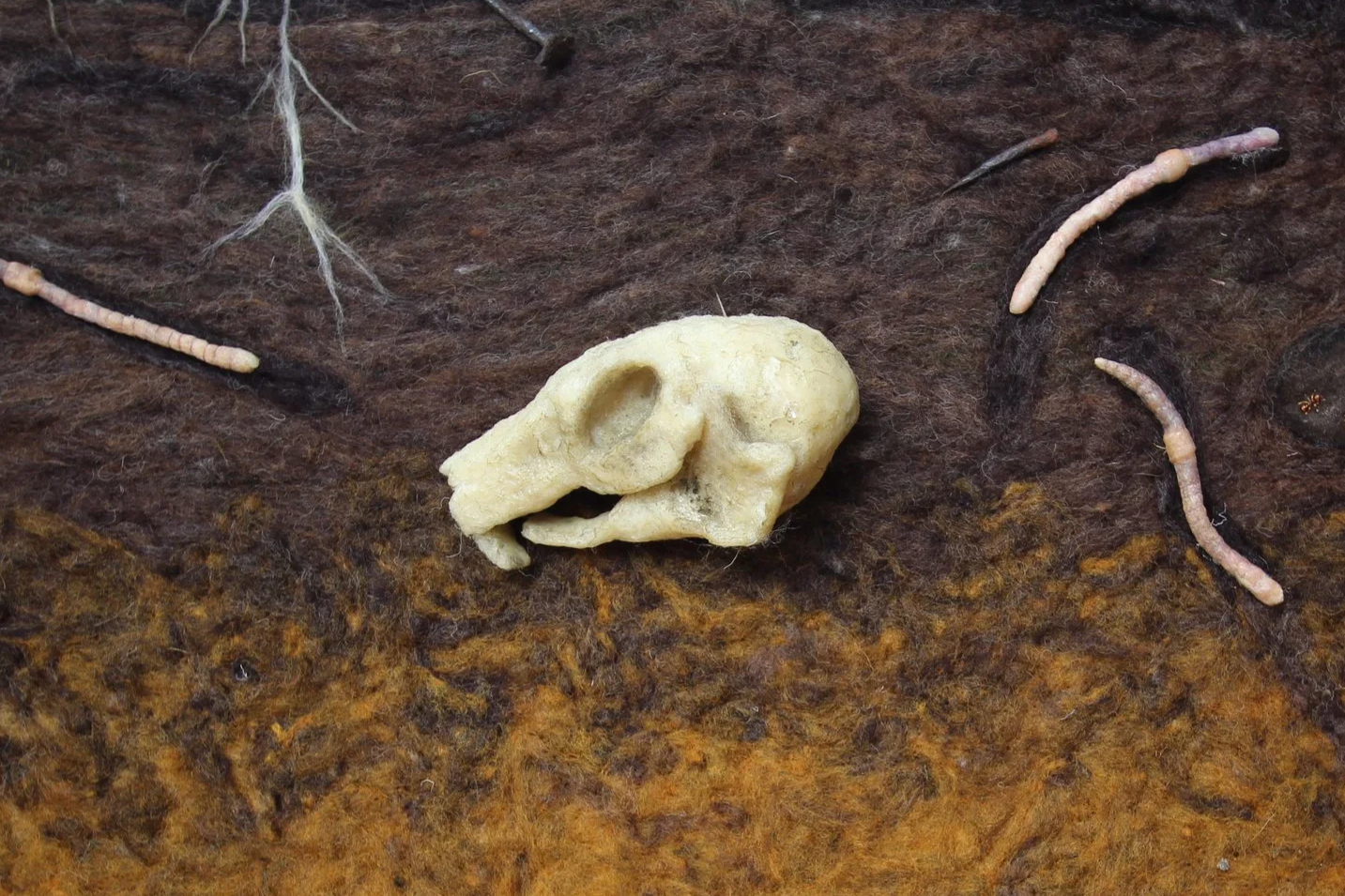
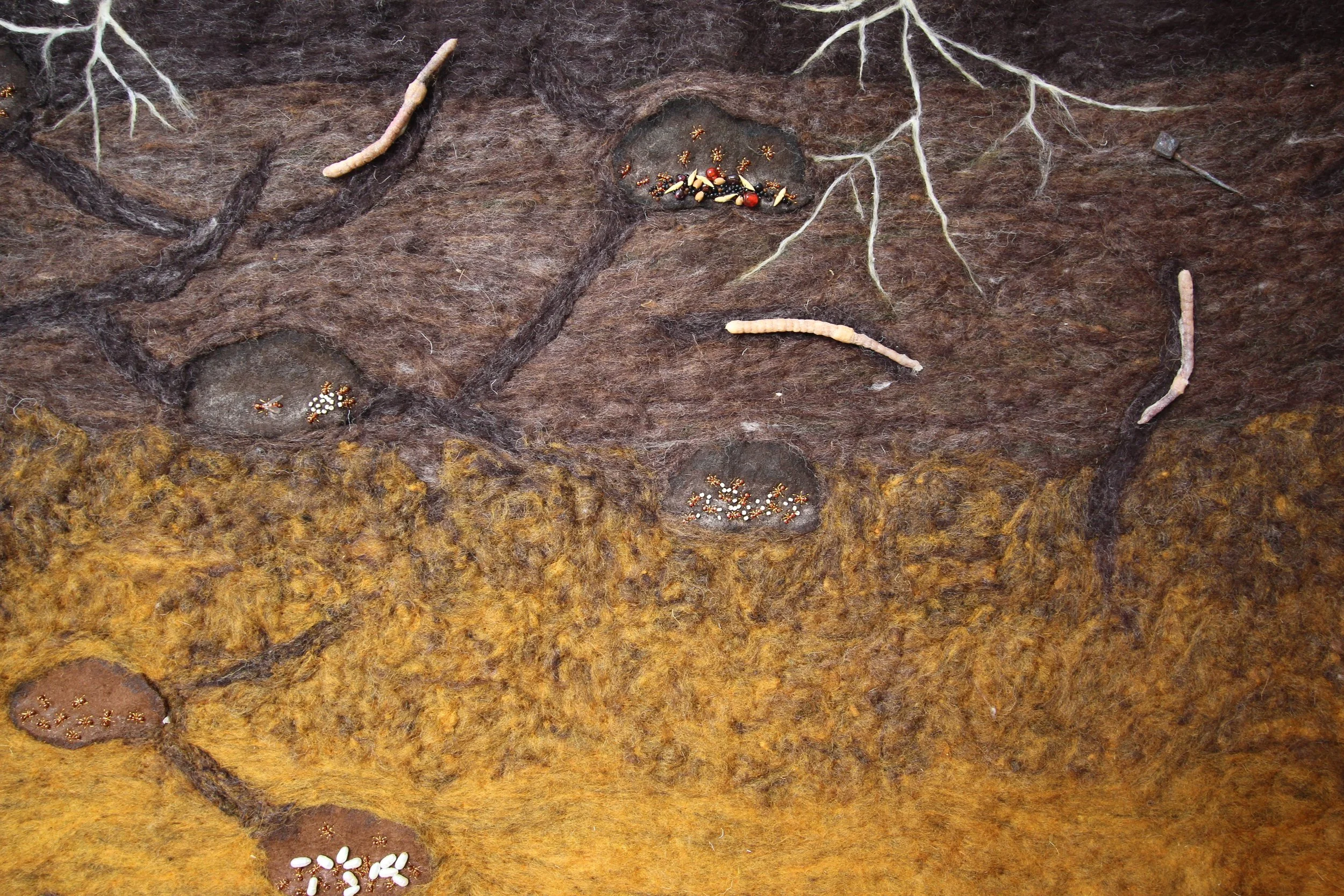
When I was doing research for my first rooted dandelion piece (“Putting Down Roots”) I learned that dandelion taproots can grow over 10 feet deep. They access – and bring to the surface– nutrients buried at depths that other plants can't reach. They can grow from seeds carried by the wind, or regrow from as little as an inch of taproot left in the ground. I have always loved dandelions, but learning about their methods of survival and resilience created a strong sense of connection for me. Their tenacity in the face of arbitrary vilification reflects the experiences of many in the current environment. As a disabled person, I exist in a world that tells me I’m not what’s meant to be here – a weed in the social garden. Our immigrant neighbors are experiencing violent uprooting by agents of the federal government. We rely on deep connections to our communities to keep us going in these situations.
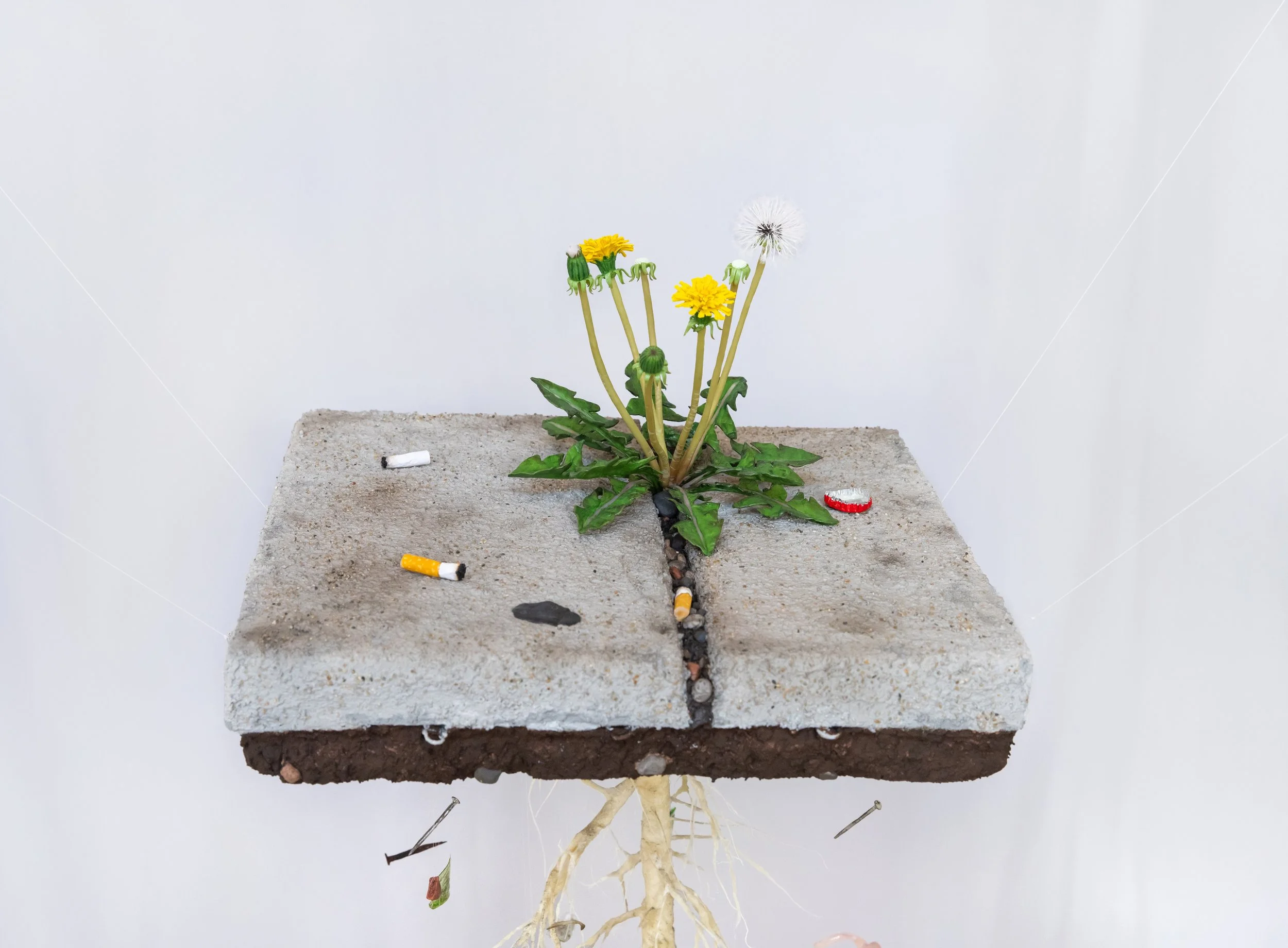
It is difficult to picture the magnitude of something extending 10 feet below us. I can picture 10 feet up, but 10 feet down gets much more abstract. I wanted to make the massiveness of the dandelion root tangible, to highlight this mammoth anchor through the earth.
Description of Installation
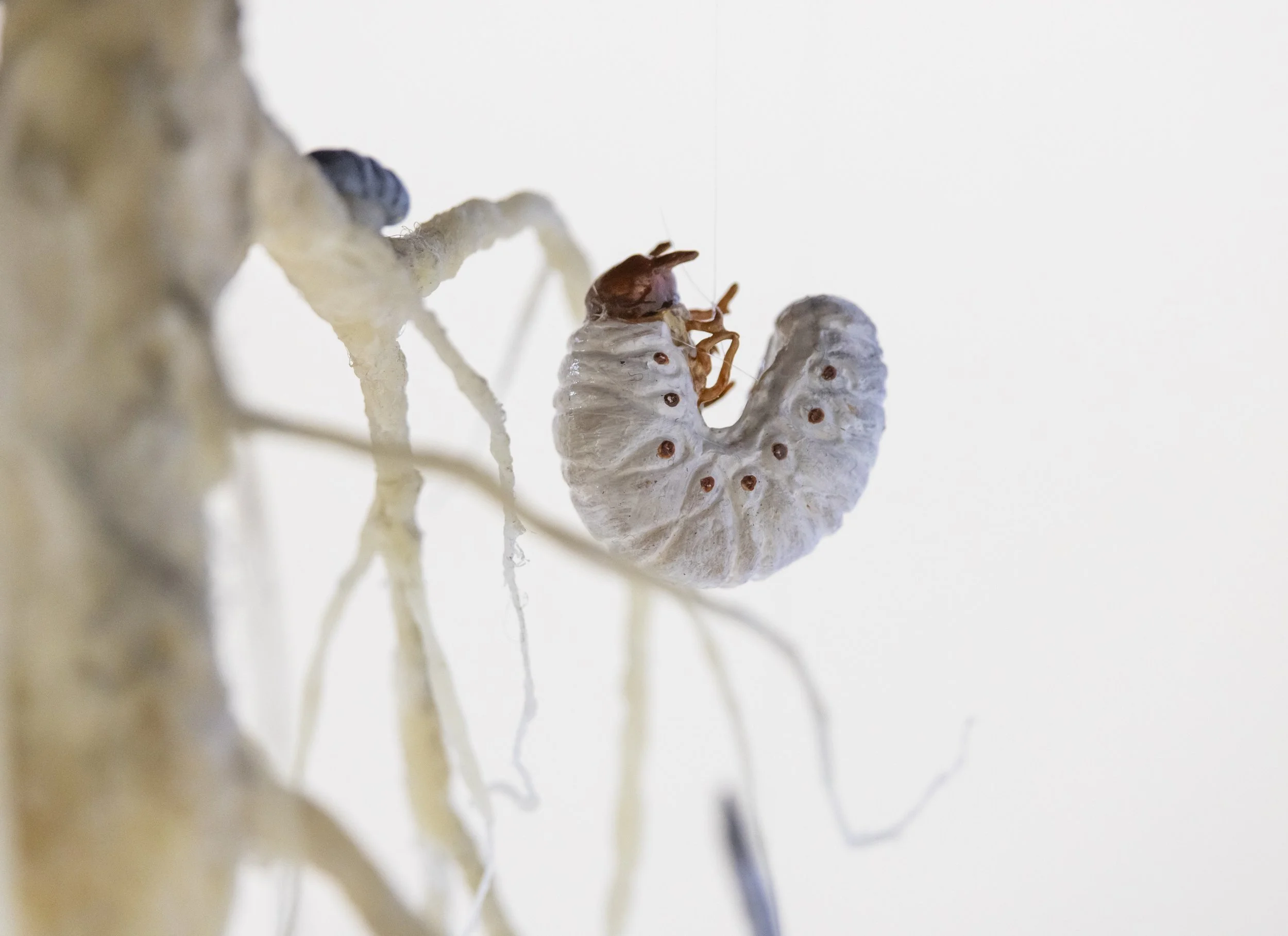
“My Roots are Deeper Than They Can Dig'“ is intended to be suspended in a 2-story space, where viewers have access to examine both the top and bottom of the piece. Examples of suitable spaces are open or spiral staircases, or areas with an indoor balcony.
Dimensions
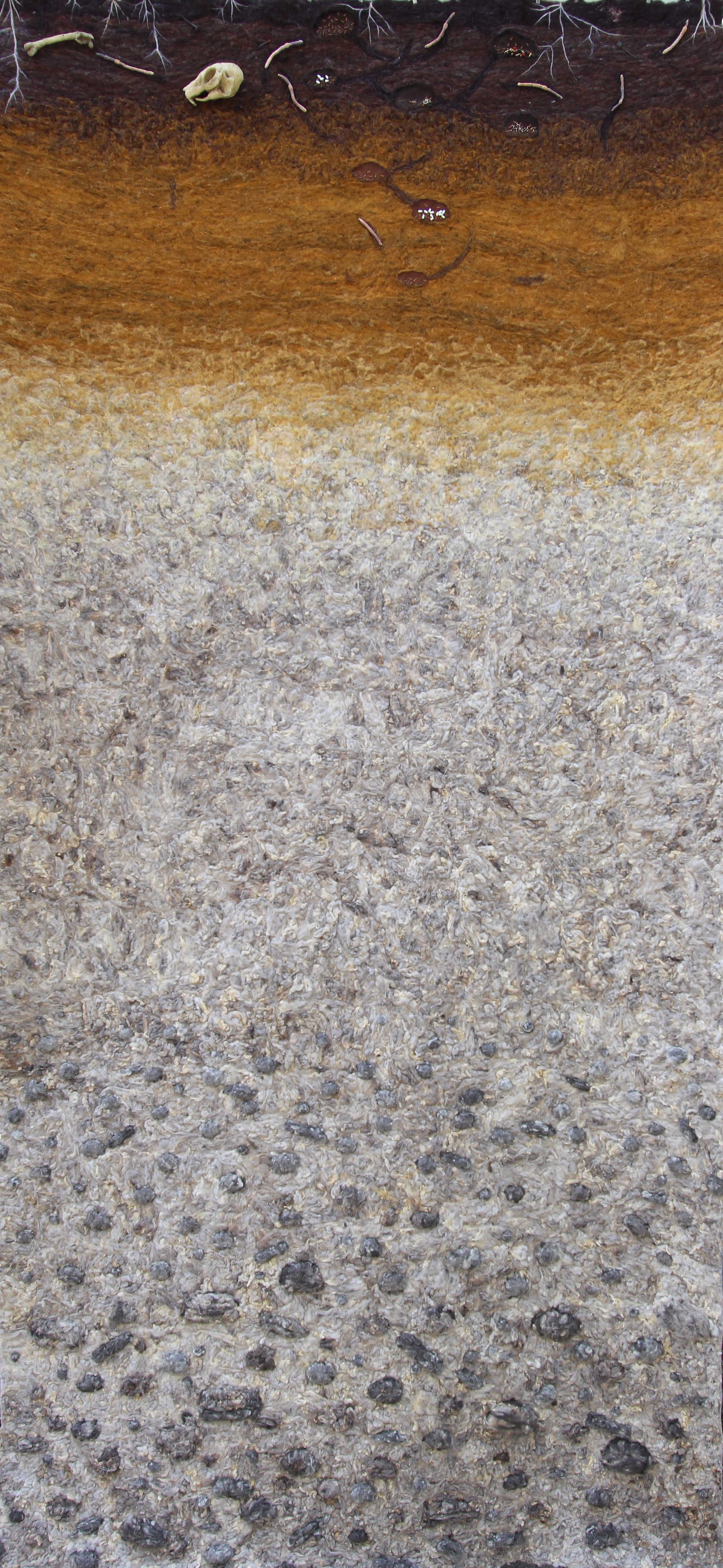
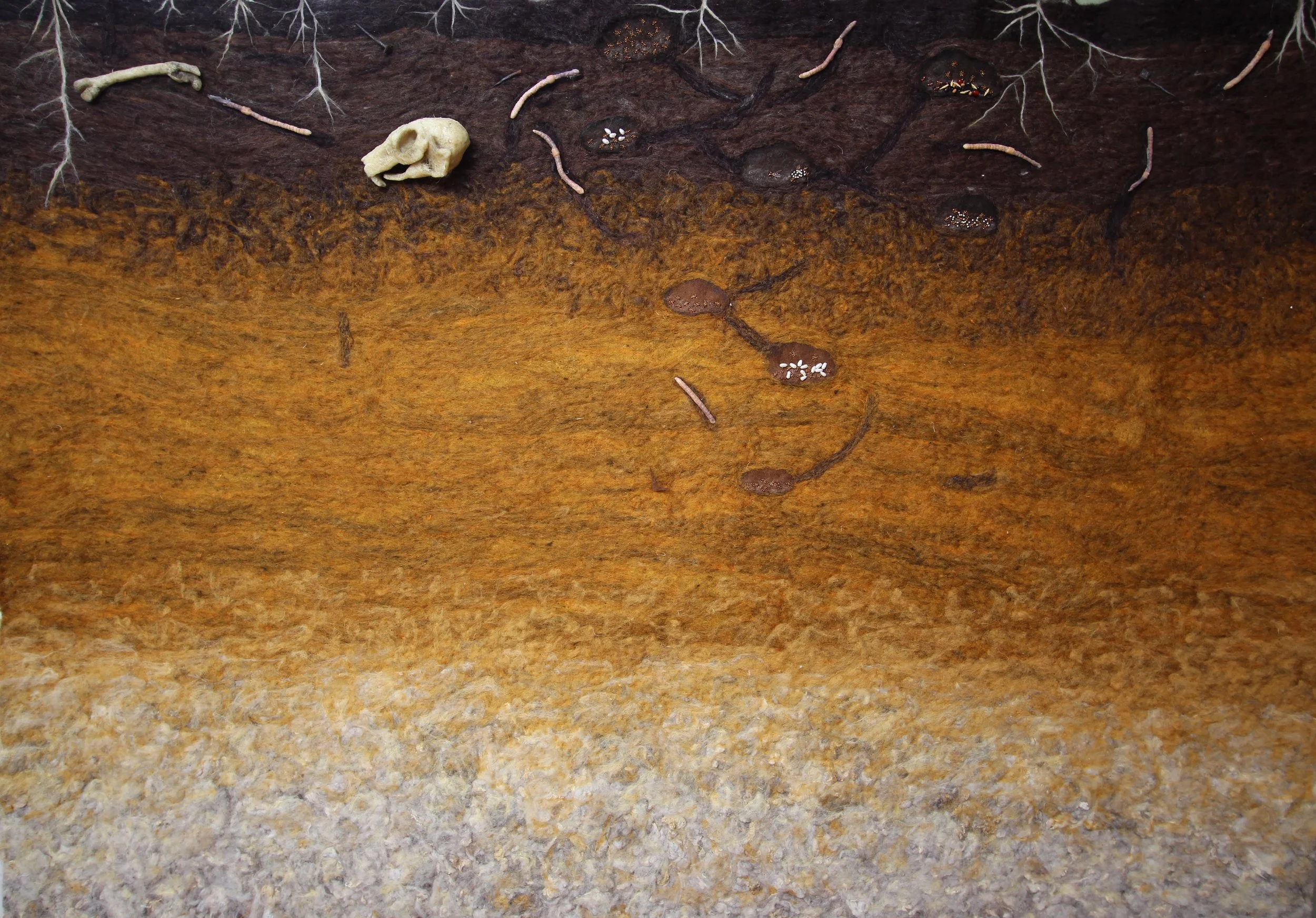
Suspended dandelion: 144×16×15" Felted mural: 132”x60”
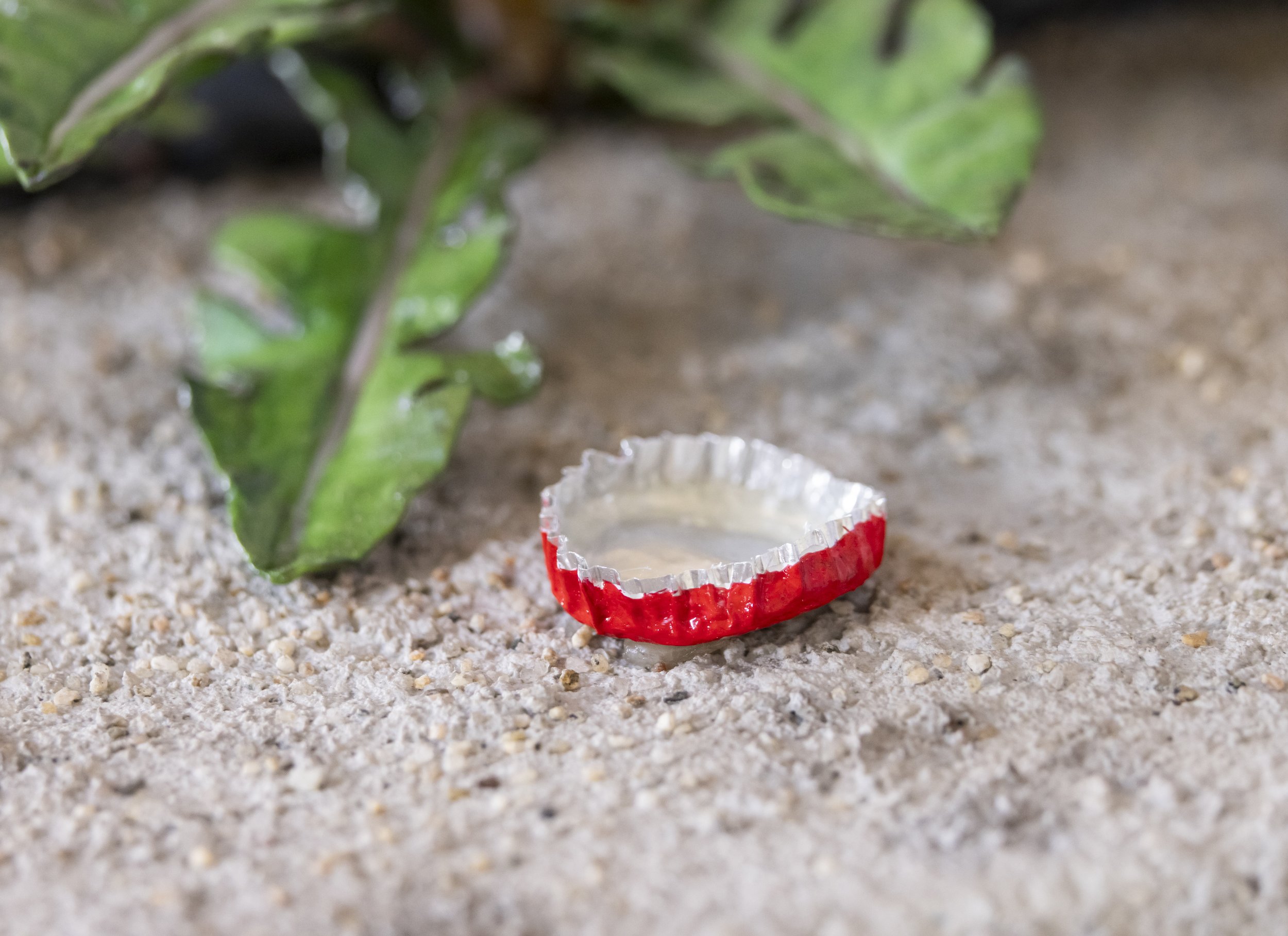
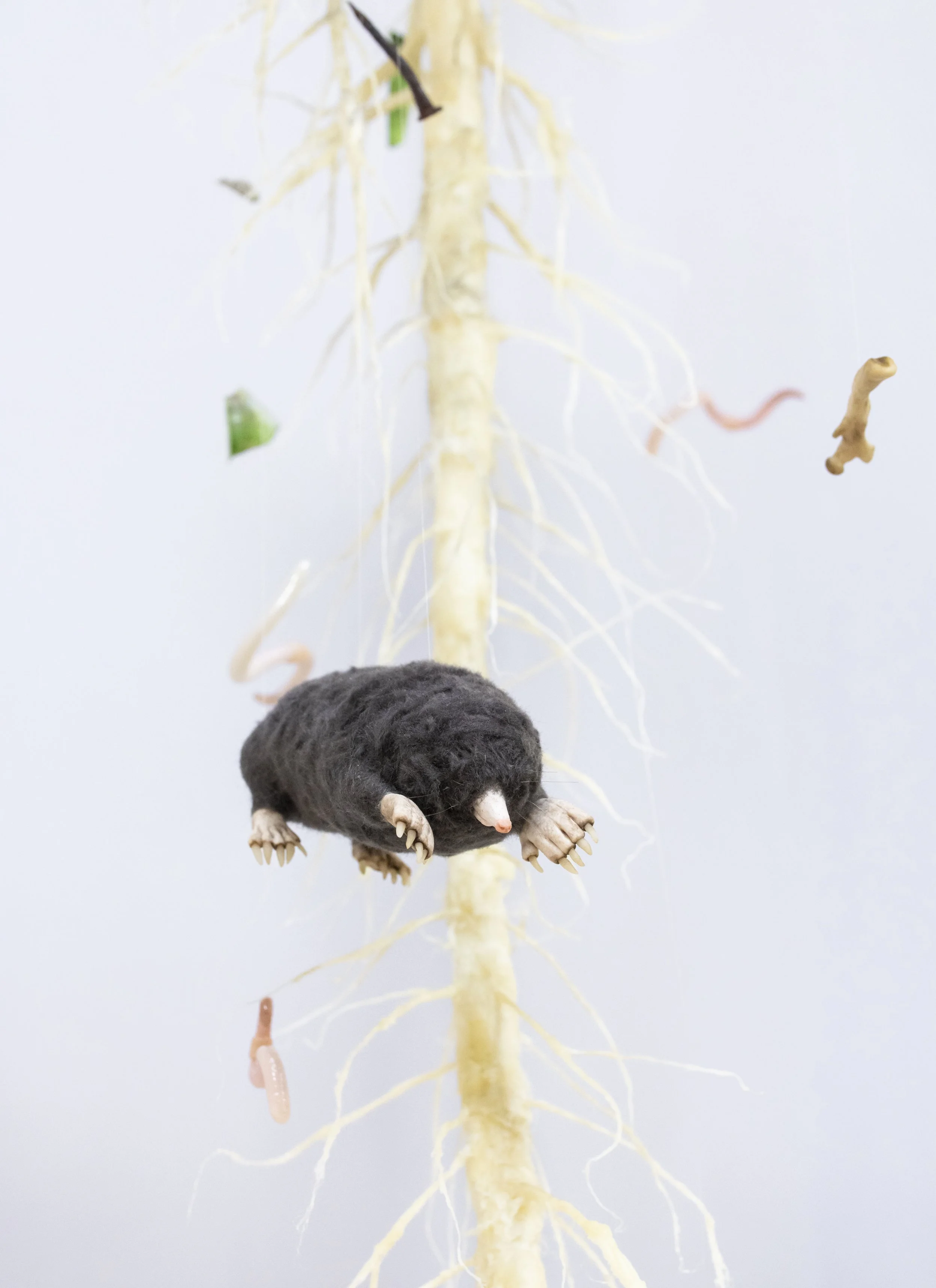
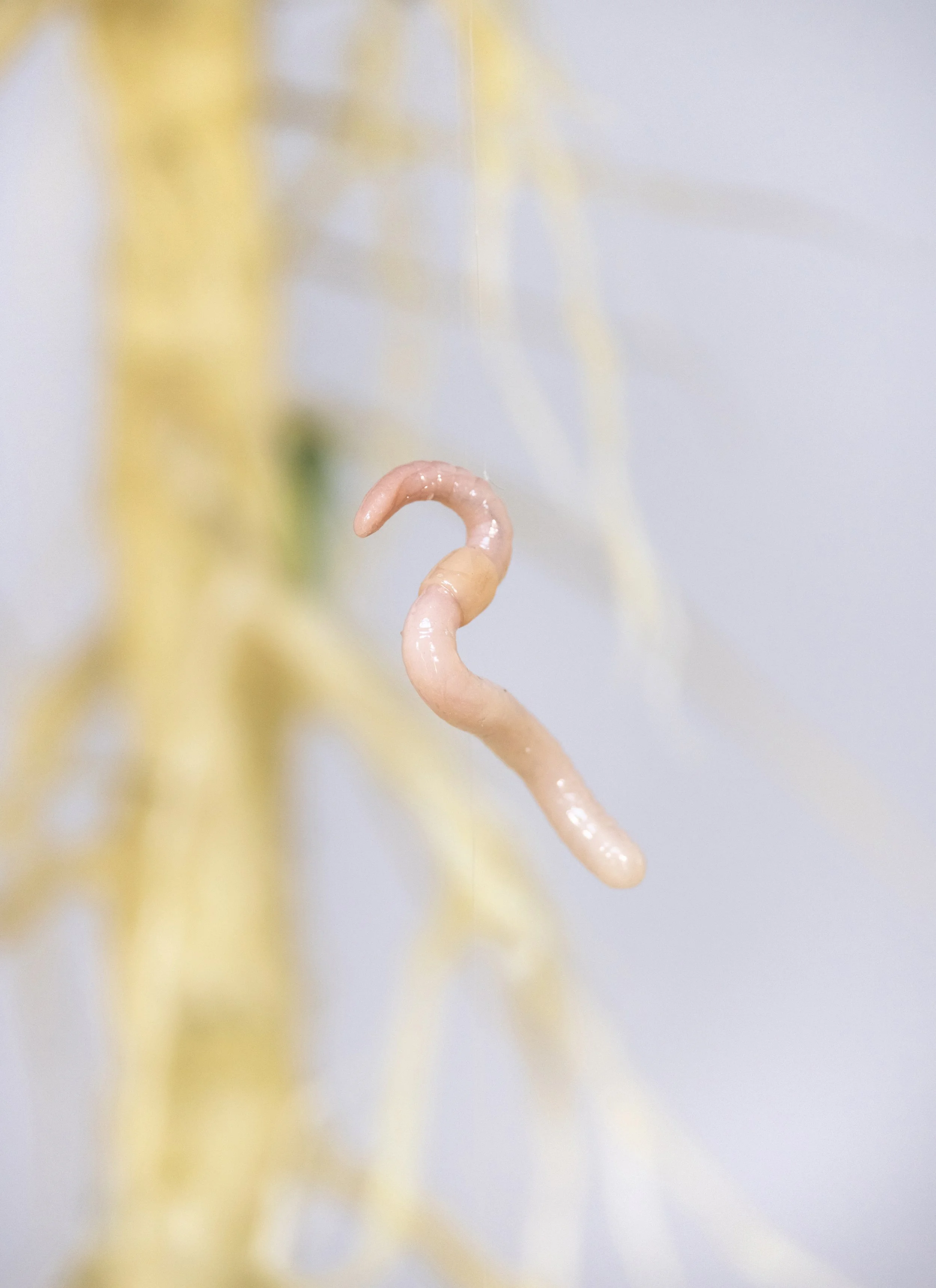
Materials: Wool, wax, clay, foam, acrylic paint, wire, paper, sand, tea, recycled aluminum, resin
2026
Equipment/Materials/Space Requirements
Suitable 2-story space with access visitor access at the top and bottom
Ability to run suspending wires/monofilament from at least 2 sides of the piece to at least 3 architecturally stable anchor points
Ability to hang or anchor felted mural backdrop
Artist Bio
Judith Klausner is a Somerville, MA artist with a love for small, intricate, and overlooked things. She received her degree in Studio Art from Wesleyan University in 2007 after constructing her thesis primarily out of insects, and has since continued to search the details of her surroundings for inspiration. Her experience of invisible disability and chronic pain play an integral role in how she views the world and creates art. Her work has been featured in Harper's magazine, Reader's Digest, the Huffington Post and NPR, and exhibited in venues internationally including the Brattleboro Museum and Art Center, Southern Vermont Art Center, Susquehanna Art Museum, Museum of Natural History, RI, Museo di Arte Moderna e Contemporanea di Trento e Rovereto, and the Boston Children's Museum. Judith enjoys playing with her food, both recreationally and professionally.
Potential Public Programs
I have a background in arts education, and making my work accessible to all ages is something I’m passionate about. To this end, I have developed a number of potential public programs. “Audience Engagement” contains casual prompts for visitors as they encounter the piece. “Drop-in Activities” are well suited to either sectioned-off areas within the galleries, or nearby spaces intended for interactive elements. “Workshops” would be one-time, signup-based events.
Audience Engagement
Scavenger Hunt
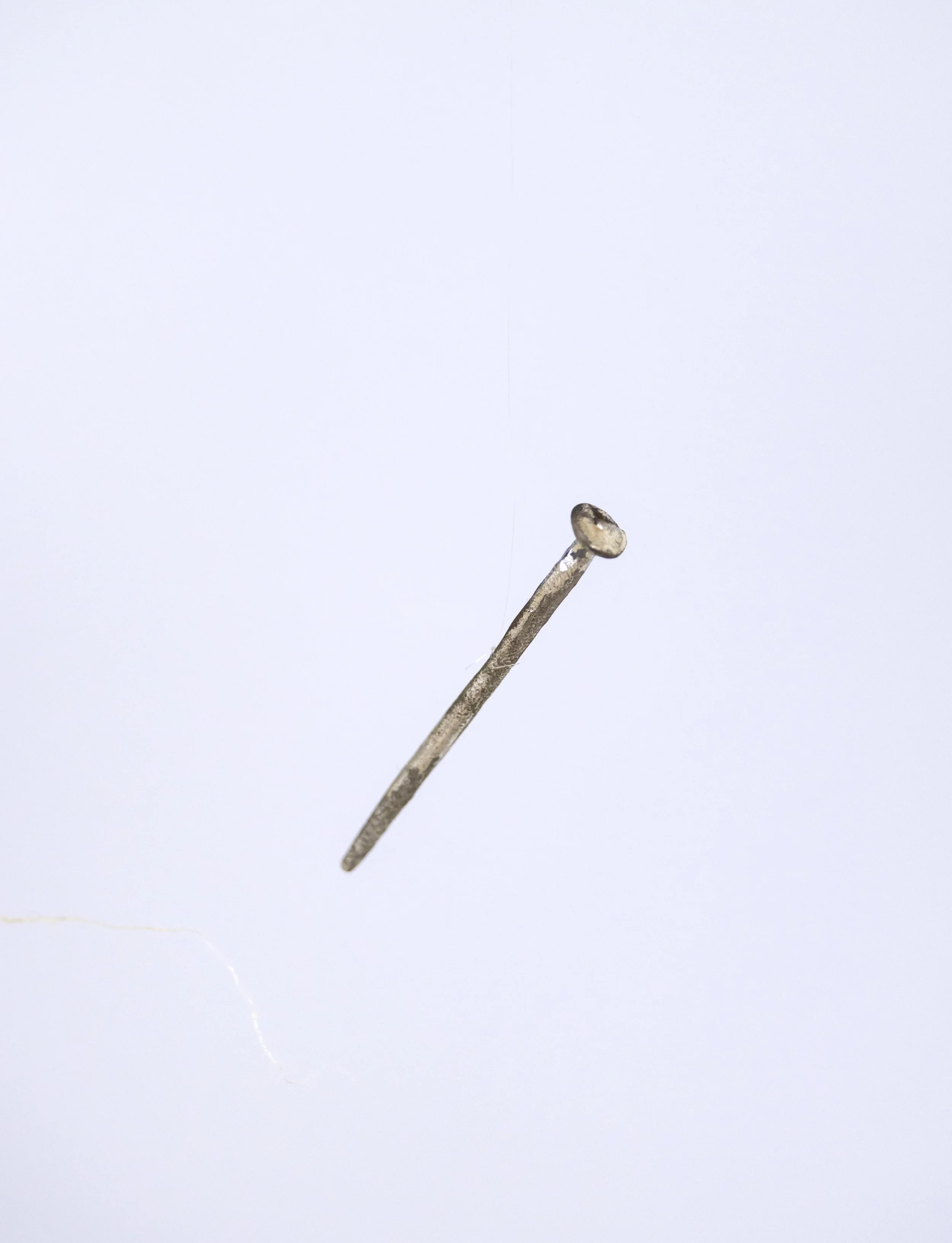
Visitors can search within the piece to find specific numbers of worms, nails, beetle grubs, and more.
No equipment/materials required
Drop-in Activities
Who Lives Where? Sorting Soil Horizon Inhabitants
Young visitors can familiarize themselves with a soil profile guide, then help put the cut-out creatures in the right place on the big soil profile.
Equipment/materials requirements:
Large ferrous-backed poster of soil horizon
Magnet-backed images of various soil-dwelling creatures
Guide to the soil profile
Workshops
“Underground” Needle felting
Beginner-appropriate needle-felting workshop covering the basics of the craft while creating a primarily 2D piece depicting a depiction of the underground world.
Equipment/materials requirements for workshop:
Tables
Chairs
Scissors
Felting needles
Felting blocks
Wool roving
Wool felt
Dandelion Tea Ceremony
This community-building workshop is organized around sharing tea and conversation, using the strategies of the dandelion to inspire “growing our roots” and “putting seeds in the wind” to connect with members of our communities both near and distant.
Equipment/materials requirements for workshop:
Chairs
Table
Dandelion root tea
Electric kettle(s)
Cups
Card-making supplies
Cardstock
Colored pencils
Markers
Old magazines
Scissors
Glue sticks
Tape
Envelopes
Partnership Workshop (dependent on availability of local foraging experts)
Herbal tea foraging with local expert
Learn what “volunteer plants” make for a yummy (and sometimes medicinal) brew!
Talks
Artist/Curator Q&A
I enjoy speaking about my work and process, and my favored format for that is a Q&A. I find this setup most conducive to developing an open dialogue, and I feel it encourages audience participation.